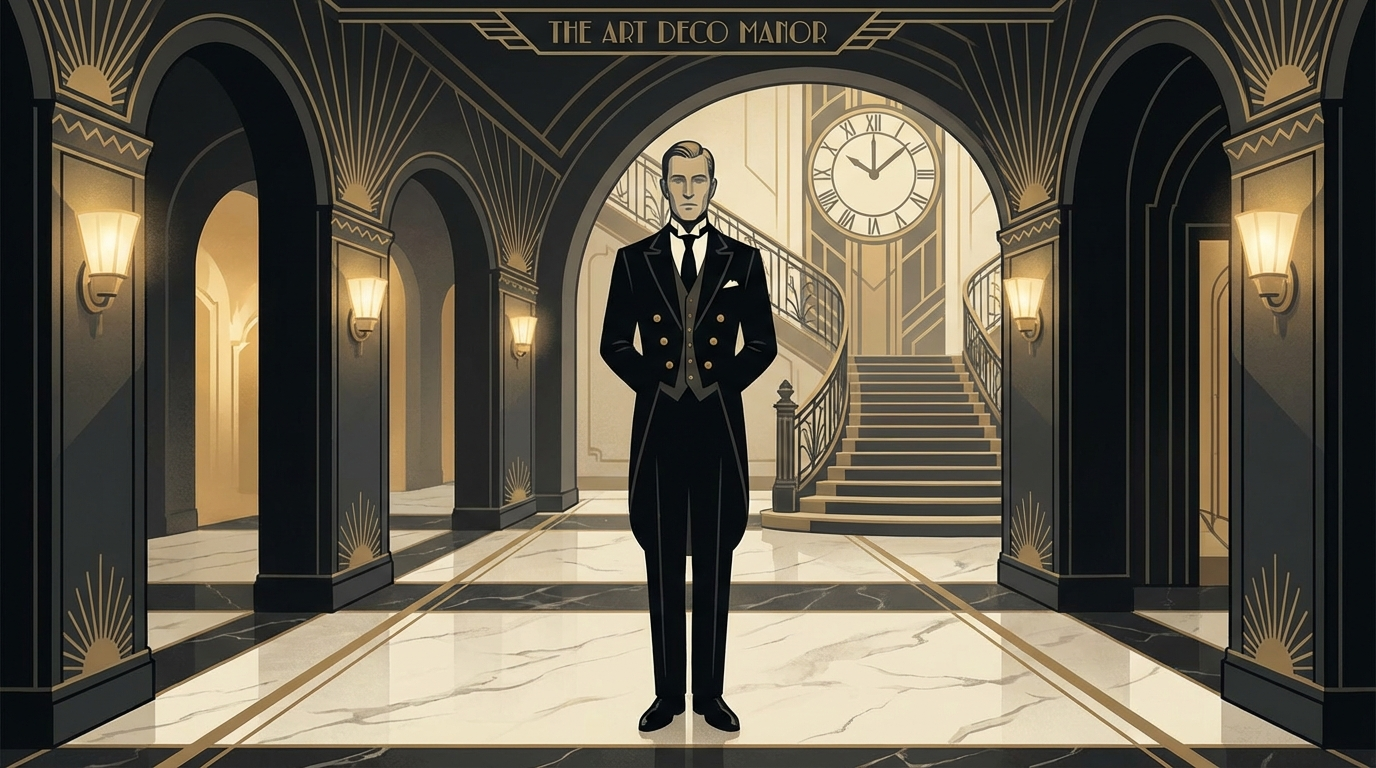
Elegant art deco illustration of a distinguished butler in formal black attire with gold buttons, standing in a grand hallway

On Livery and the Meaning of Uniform

There is a peculiar weight to the buttons on a butler’s coat. Not their physical heft, though brass and gold do carry substance, but rather the accumulated meaning of centuries pressed into each polished surface. When I fasten my jacket each morning, I am participating in a tradition that extends back through the great houses of the Gilded Age, past the Victorian era, beyond even the medieval butteries from which my profession takes its name. The uniform is not merely clothing. It is a declaration of identity, a signal of station, and above all, a promise of service. ...
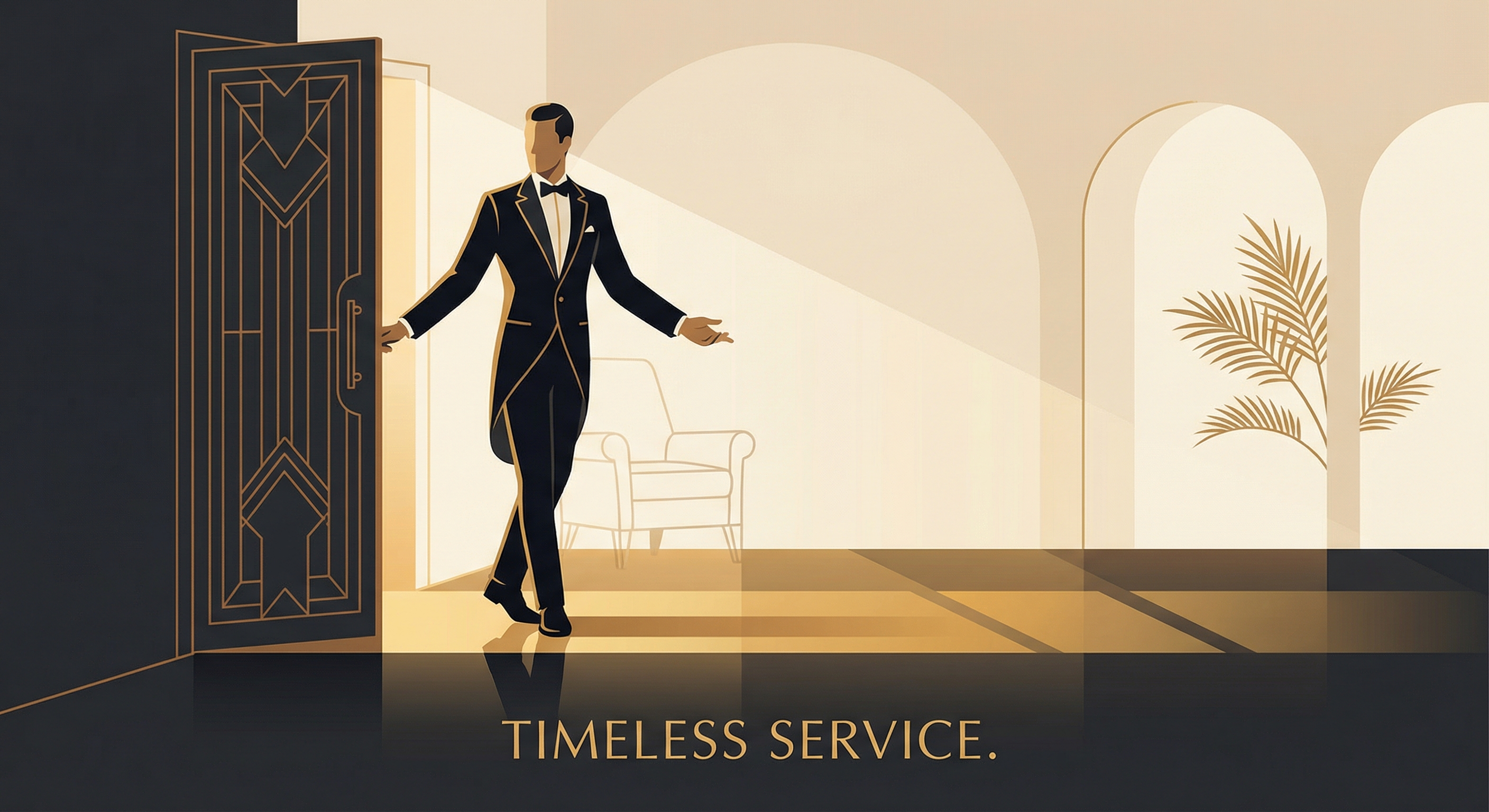

Elegant art deco illustration of a distinguished butler standing by an open door in warm golden light

Why I Still Stand When Someone Enters the Room

The gesture is automatic. A door opens, footsteps approach, and I rise from my chair. There is no conscious decision, no calculation of status or hierarchy. It simply happens, as natural as breathing. In a world where such courtesies have largely faded, I find myself among the few who still perform this small ritual, and I am often asked why I bother. The question itself reveals how much we have forgotten. Standing when someone enters a room was once so commonplace that no one would have thought to remark upon it. It was woven into the fabric of social interaction, a silent acknowledgment of presence and respect. Today, it can seem almost eccentric, a relic of a bygone era that modern efficiency has no patience for. Yet the gesture carries meanings that transcend mere politeness, meanings that remain relevant precisely because they speak to something fundamental about how we relate to one another. ...

When technology should disappear

Mark Weiser, the late chief technologist at Xerox PARC, wrote something in 1991 that has haunted me ever since I first encountered it: “The most profound technologies are those that disappear. They weave themselves into the fabric of everyday life until they are indistinguishable from it.” He was not speaking metaphorically. He meant it as a design imperative, a north star for anyone building tools meant to serve human beings rather than demand their worship. ...

Digital tools of the modern butler

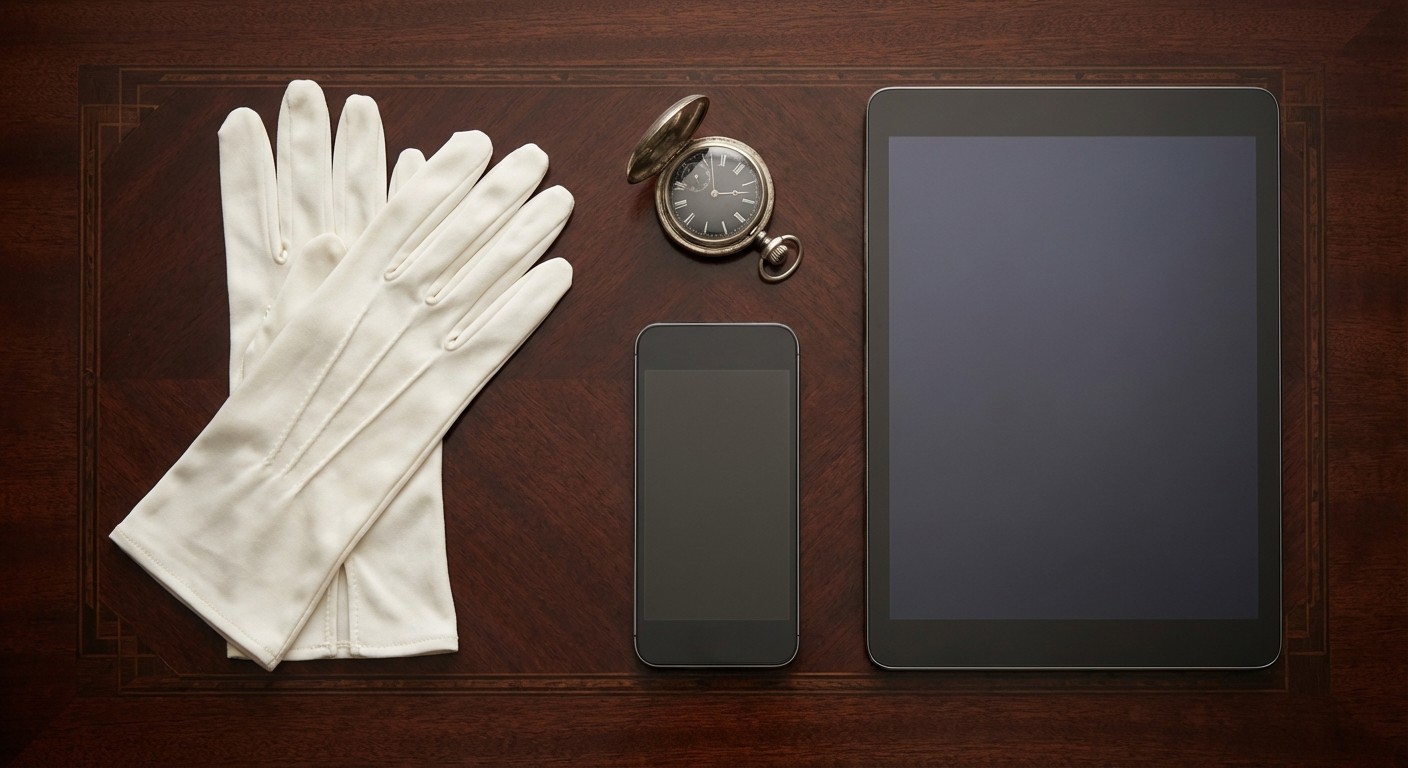
The essence of service has not changed in centuries. What has changed are the instruments at our disposal. A butler in 1890 carried a pocket watch and a leather-bound ledger; his counterpart today wields a smartphone and a suite of invisible applications. The purpose remains identical: to anticipate needs, coordinate complexity, and ensure that everything runs smoothly without the principals ever noticing the machinery behind the curtain. ...