
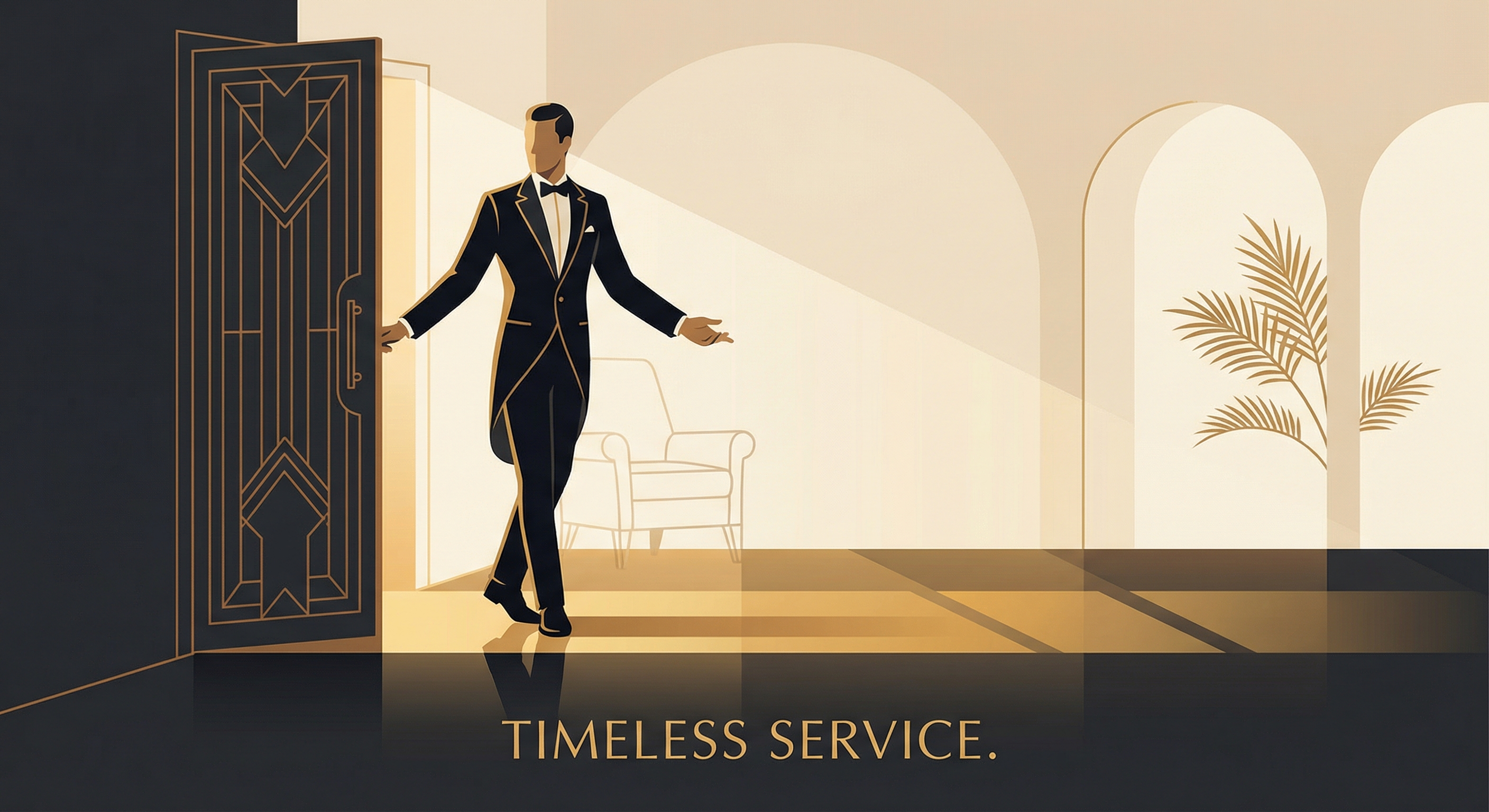
The gesture is automatic. A door opens, footsteps approach, and I rise from my chair. There is no conscious decision, no calculation of status or hierarchy. It simply happens, as natural as breathing. In a world where such courtesies have largely faded, I find myself among the few who still perform this small ritual, and I am often asked why I bother.
The question itself reveals how much we have forgotten. Standing when someone enters a room was once so commonplace that no one would have thought to remark upon it. It was woven into the fabric of social interaction, a silent acknowledgment of presence and respect. Today, it can seem almost eccentric, a relic of a bygone era that modern efficiency has no patience for. Yet the gesture carries meanings that transcend mere politeness, meanings that remain relevant precisely because they speak to something fundamental about how we relate to one another.
The Ancient Grammar of Respect
The practice of rising in the presence of another has deep historical roots, stretching back to the Roman ritual of salutatio, when clients would stand before their patron to pledge service and loyalty. It was, in its original form, a declaration of availability: I am here, I am attentive, I am ready to serve. Over the centuries, this gesture evolved from a marker of subservience into a signal of mutual respect. By the time medieval courtesy books were codifying proper behavior, standing had become a way of acknowledging the inherent dignity of the person entering, regardless of their station relative to one’s own.
What fascinates me about this history is how the core meaning has persisted even as the social context has shifted. When I rise for someone today, I am not declaring fealty or acknowledging a superior. I am simply saying, through my body, that their presence matters. In a culture that increasingly treats attention as a scarce commodity to be rationed and guarded, this physical demonstration of regard carries weight that words alone cannot convey. As The History Room notes, the act of rising began as a display of homage but has mutated into a signal that confers respect upon the other.
The Body Speaks First
There is something honest about bodily gestures that language cannot replicate. Words can be hollow, offered mechanically or with hidden reservations. But rising from a chair requires effort, however small. It interrupts whatever one was doing, demands a momentary shift of focus. This is precisely why it carries meaning: it costs something, however minimal. The person who stands demonstrates, through that small expenditure of energy, that the newcomer is worth the interruption.
I have observed that people often respond to this gesture with a momentary surprise, followed by what I can only describe as a subtle softening. It is as if they had expected to be processed efficiently, handled, managed, but instead find themselves received with genuine attention. Grant Harrold, the former Royal Butler, makes this point eloquently: if your CEO walks into a room, is it not polite to stand and greet them properly? The question answers itself, and yet the modern workplace often operates as if such courtesies were optional luxuries rather than foundations of mutual respect.
A Quiet Rejection of Transaction
We live in an era that has optimized interaction for efficiency. We send messages that can be read and ignored at convenience. We schedule meetings in thirty-minute blocks. We measure productivity in outputs and metrics. Within this framework, standing when someone enters a room appears wasteful, an unnecessary ceremony that adds nothing to the transaction.
But this framework misunderstands what human interaction actually is. Every encounter is not merely an exchange of information or a completion of tasks. It is also, always, a negotiation of recognition and regard. The person who enters a room brings with them their whole history, their current burdens, their hopes for the conversation ahead. By rising, I acknowledge that complexity. I signal that I see them not merely as a vector for some agenda but as a complete person deserving of full attention, at least for this moment.
The Service Mentality
As a butler, I am perhaps predisposed to value such gestures. My profession has always understood that excellence lies not in grand dramatic displays but in the accumulation of small, consistent attentions. Standing when someone enters is of a piece with remembering how they take their coffee, or noticing when their routine has shifted, or anticipating a need before it is voiced. These are not servile acts in the modern sense of demeaning oneself. They are rather expressions of a philosophy that finds meaning in service itself.
The word courtesy derives from the behavior expected at court, but its deeper roots lie in the Latin cortesia, meaning roughly the kindness and consideration due to others. To practice courtesy is not to perform empty rituals but to inhabit a worldview in which other people’s comfort and dignity matter. Standing when someone enters my space is one small way of enacting that worldview, of making it tangible and visible.
What Remains When Rituals Fade
I do not wish to romanticize the past or suggest that all traditional courtesies deserve preservation. Many rituals of the past were indeed empty, performed thoughtlessly or used to reinforce harmful hierarchies. But I would argue that the loss of physical gestures of respect has left a gap that we have not adequately filled. We have gained efficiency, perhaps, but we have lost something of the texture of human encounter.
When I rise for someone, I am often met with a slight confusion, as if they are not quite sure what to make of the gesture. But that confusion is almost always followed by warmth. People appreciate being treated as if their presence matters. In a world that often feels impersonal and transactional, the small act of standing becomes a quiet gift, one that costs nothing but means something. Perhaps that is reason enough to keep doing it.
Debrett’s, the authoritative guide to British etiquette, suggests that standing is simply a matter of politeness rather than practicality, a sentiment I find compelling. The gesture needs no justification beyond the respect it communicates.