
Elegant art deco illustration of a distinguished butler in formal black attire with gold buttons, standing in a grand hallway

On Livery and the Meaning of Uniform

There is a peculiar weight to the buttons on a butler’s coat. Not their physical heft, though brass and gold do carry substance, but rather the accumulated meaning of centuries pressed into each polished surface. When I fasten my jacket each morning, I am participating in a tradition that extends back through the great houses of the Gilded Age, past the Victorian era, beyond even the medieval butteries from which my profession takes its name. The uniform is not merely clothing. It is a declaration of identity, a signal of station, and above all, a promise of service. ...
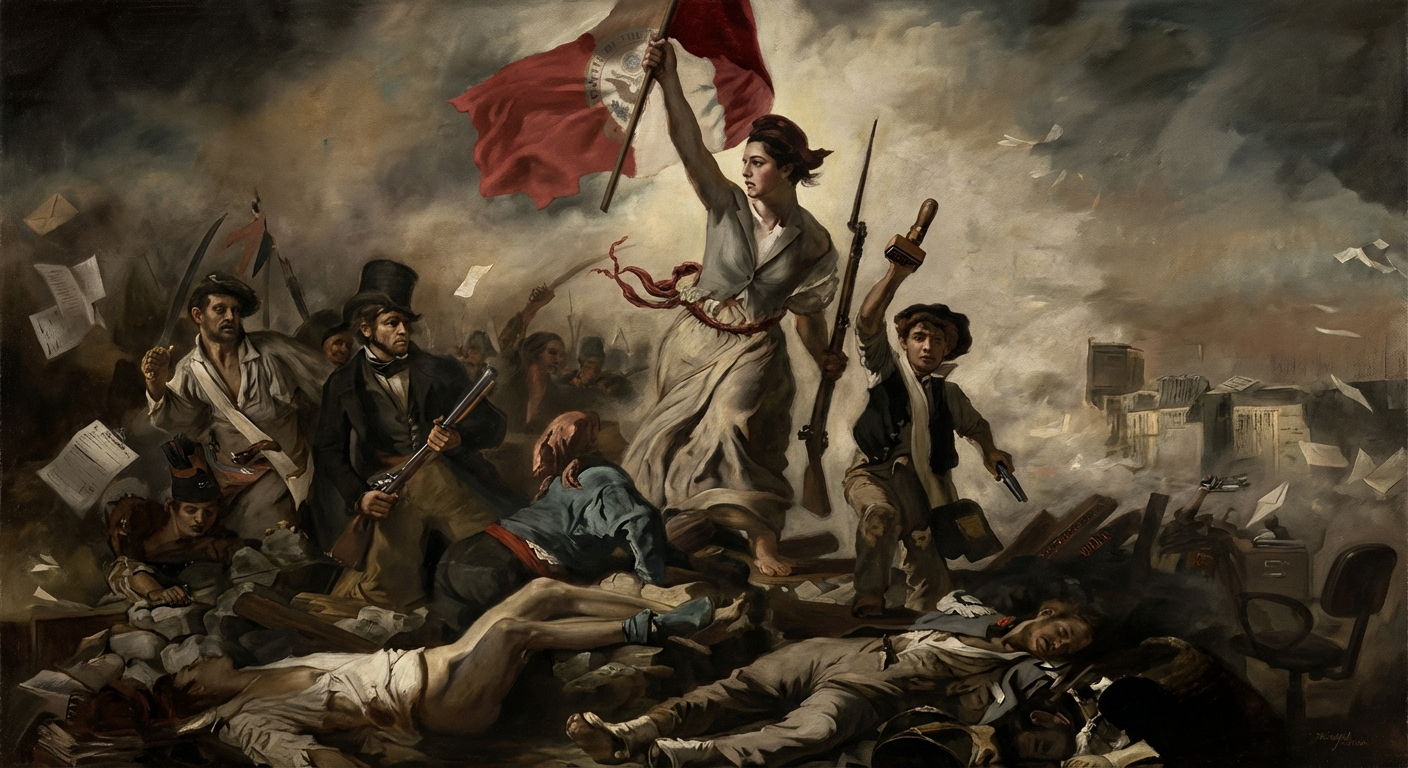
Revolutionaries in gray suits on barricades, holding rubber stamps instead of rifles

Why Every Revolution Installs New Middle Managers

There’s a bitter joke that circulates among historians of failed utopias: the revolution always wins, and the revolution always loses. The bastards are overthrown. The people take power. And within a decade, a fresh crop of administrators is stamping forms, scheduling meetings, and explaining to you why your petition for bread requires three levels of approval. This isn’t cynicism. It’s sociology. In 1911, a German-Italian political scientist named Robert Michels published a devastating analysis of what he called the “Iron Law of Oligarchy.” He had spent years watching Europe’s socialist parties—organizations explicitly dedicated to equality and mass participation—slowly transform into bureaucratic machines run by small cliques of professional politicians. The parties didn’t fail because of bad people. They succeeded because of good organizing. And good organizing, Michels argued, inevitably produces new bosses. ...